
Specialized Dysgraphia Tutoring
Evidence-Based Writing Intervention
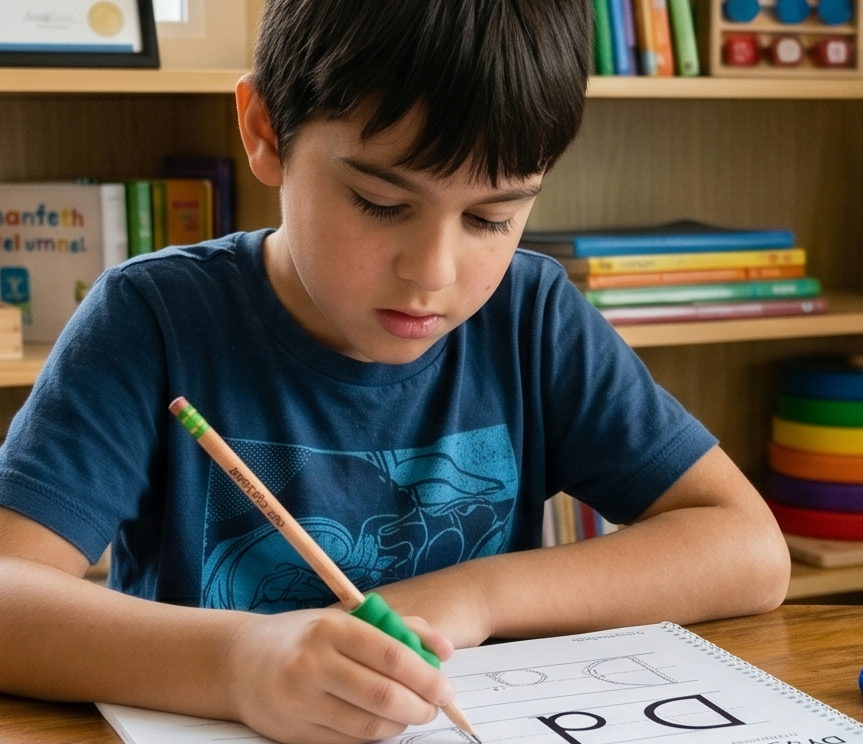
Expert Dysgraphia Support Services Tailored to Your Needs.
Dysgraphia is a specific learning difference that impacts a child's ability to produce written language. It is far more complex than poor handwriting or messy fine motor skills.
Dysgraphia affects the neurological process of translating thoughts into written symbols, leading to issues with letter spacing, spatial organization on paper, physical writing fatigue, spelling, and paragraph formulation. For a child with dysgraphia, standard school writing assignments can become an exhausting, stressful hurdle that masks their true intellectual capabilities.
At Jamie The Tutor, we know that written expression should not be a barrier to your child's success. We provide explicit, systematic, and individualized writing intervention designed to isolate and build the discrete mechanics of writing. Our team consists exclusively of certified, professional career teachers who understand the cognitive and motor pathways required for written communication.
We address the root blockages, helping your student find their written voice with complete confidence.

Compassionate
Personalized Interventions

Professional Teachers
Amazing Results
Our Multisensory Approach to Dysgraphia Remediation
Jamie The Tutor provides highly specialized, one-on-one intervention tailored to meet the specific writing and fine-motor challenges faced by students with dysgraphia. Utilizing evidence-based, multisensory strategies, the program explicitly teaches the mechanics of writing, ranging from proper grip and letter formation to spatial awareness on the page and the structural organization of thoughts. By breaking the writing process down into manageable, stress-free steps and incorporating interactive tools, these sessions alleviate physical fatigue and frustration, ultimately transforming writing from a daunting task into a confident medium for self-expression.
Comprehensive Support Beyond Traditional Tutoring
Overcoming dysgraphia requires an integrated approach that targets both physical output and environmental learning frameworks. Jamie The Tutor provides a comprehensive ecosystem of services designed to lift the academic burden from your family and ensure steady, clear progress across all settings.
Comprehensive Educational Assessments
To understand the precise nature of your child's writing difficulties, we can conduct targeted informal and formal educational writing assessments. These evaluations analyze fine motor writing speed, letter formation automatization, and written language formulation to give our instructional team the data needed to construct a completely customized learning roadmap.
Special Education (ESE) Advocacy & Accommodations
Securing formal writing accommodations at school is crucial for a child with dysgraphia to demonstrate their true intelligence. Our team includes experienced special education advocates who guide families through the 504 Plan and IEP processes. We advocate for essential classroom accommodations such as the use of assistive speech-to-text software, permission to dictate answers orally, provided copies of classroom notes, or customized graphic organizers for testing.
Direct School Collaboration
We serve as an active partner alongside your child's school teachers and administrative staff. Our instructional team communicates regularly with school educators to ensure the specialized multisensory strategies and tactile adaptations built during our private sessions are understood and actively reinforced throughout the school day.
Flexible Hybrid & Online Learning Formats
Consistent practice is vital for building writing muscle memory and cognitive processing speed. To accommodate your family's busy schedule, our specialized dysgraphia services are delivered through interactive, high-engagement online tutoring models or face-to-face local instruction, keeping quality intervention accessible at all times.
Key Benefits of Jamie The Tutor for Families with a Dysgraphic Learner
Standard classroom writing instruction frequently rushes past the physical and spatial rules of text production, leaving neurodiverse students overwhelmed. Our specialized tutoring utilizes highly engaging, multisensory tools that isolate the physical mechanics of writing from the cognitive demands of language composition.
Key Features:
- Certified Writing Specialists: Direct instruction from career educators trained in neurodiverse fine motor and language models.
- Cultivates Fluent Written Expression: Help students bypass mechanical bottlenecks empowering them to confidently articulate.
- IEP & 504 Plan Advocacy: Expert guidance to ensure your child can utilize necessary assistive writing tools in class.
- Confidence-First Instruction: Low-pressure routines designed to separate spelling and physical output anxiety from creative thought.
Unlock Your Child's Written Potential Today
Do not let physical writing frustration obscure your child's bright ideas. Early, explicit, multisensory writing intervention can remove mechanical blocks and give your child the tools to write with absolute freedom and confidence.
Picking the Best Dysgraphia Tutoring Doesn't Have to Be Difficult
Frequently Asked Questions
What are the primary differences between poor handwriting and dysgraphia?
Answer: Poor handwriting is typically a general lack of neatness that can be improved with basic practice. Dysgraphia is a neurological processing difference that disrupts the link between cognitive thinking and physical muscle execution. A child with dysgraphia may understand a concept completely but find themselves completely unable to write it down. Their writing often features inconsistent letter sizes, mixed uppercase and lowercase letters, poor word spacing, severe spelling errors, and acute physical pain or cramping after writing only a few sentences.
Does dysgraphia impact a child's spelling abilities?
Answer: Yes, dysgraphia frequently impacts spelling. Because the brain is forced to expend a massive amount of working memory just to handle the physical mechanics of drawing the letters and staying on the line, there is very little cognitive energy left over to process accurate spelling rules and word structures. Our intervention strategies address this by separating spelling instruction from physical writing mechanics, using multisensory alphabetic tiles to build phonics skills before transitioning those words to paper.
How can a student practice writing during an online tutoring session?
Answer: Our interactive online tutoring platform is designed to make writing physical and tactile even through a screen. Tutors utilize the camera to closely monitor a student's hand positioning and pencil grip adjustments in real time. We suggest families also use specific physical materials at home, such as raised-line paper or adaptive pencil grips. Students perform writing exercises on camera, utilize physical and electronic tools, and work with visual graphic organizers, ensuring the session remains completely hands-on.
What types of classroom accommodations should I request for my child with dysgraphia?
Answer: Valuable accommodations for dysgraphia are designed to circumvent the physical block of writing so the student can show what they know. Common accommodations include the use of speech-to-text software, access to a keyboard for typing assignments, being provided with pre-written outline notes from the teacher, and the use of raised-line or graph paper. Additionally, allowing oral testing options and grading assignments strictly on content rather than handwriting neatness or spelling can transform a student's classroom performance.

Get In Touch
Request a Call
Our experts are here to help. Schedule a call to speak with a learning expert today.